Settling In
I’m not sure if you noticed but Winter is here. And, man, am I over it.
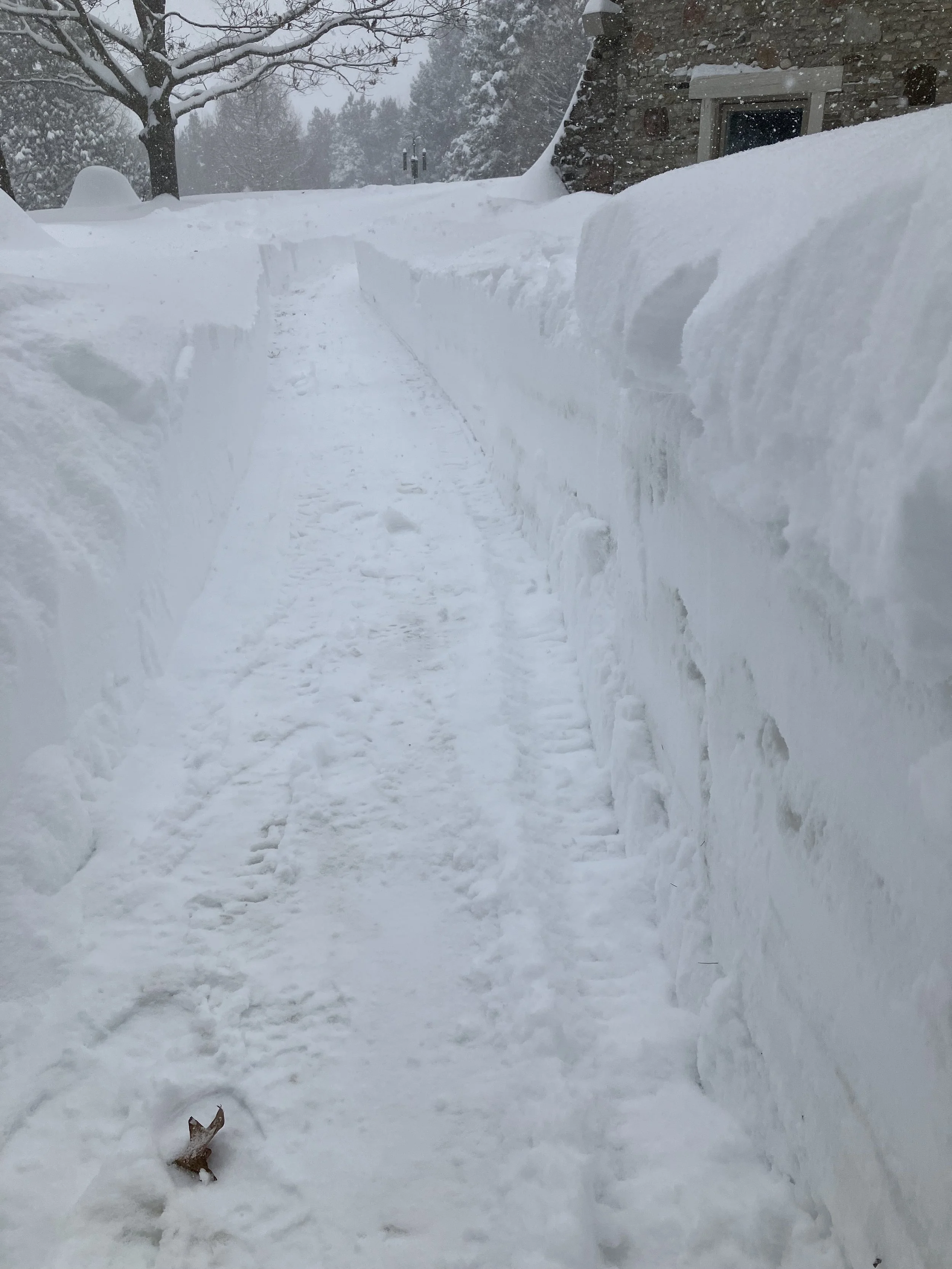
So pretty, yada, yada, yada.
I was all geared up this year with my snowshoes and skis to take Winter by storm! Dammit, I wasn’t going to complain about the cold and the snow for four months, I was going to get out there and enjoy it! But, holy shit, it’s cold. Way too cold for this delicate snowflake, anyway.
I’m feeling super cabin feverish. My skin is dry and itchy. I’m craving carbs and meat (a hard sell for a mostly vegetarian). I’m cranky and ornery (what a great word) and hard to be around. And, not that I am a particularly productive person, I am all listless and bleh. Sometimes, I wish I still drank whiskey or any alcohol at all really.
It’s gotten me thinking back to the olden days, the days of settlers in their creeky old cabins, north winds howling through the logs.
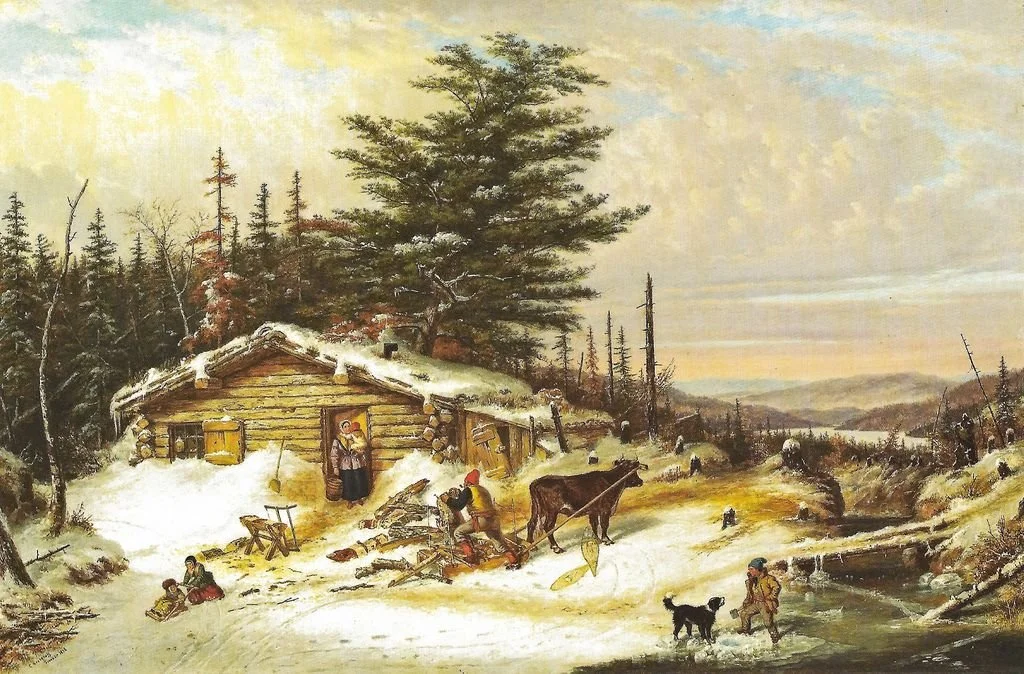
Cornelius Krieghoff - Settler's Loghouse, 1856 at Art Gallery of Ontario
Do you see the size of that teeny tiny house? And the number of people who lived in it? Plus a dog? And maybe the cow? And the fact that it’s Winter and there is no central heating nor hot water coming out of taps? No heat at all - just a whole pile of hand woven blankets and a woodstove? Fuck me, how did they manage through the long, dark, freezing cold days and nights of Winter without dying or killing one another?
Settlerism: It’s In My Blood
I know we’re supposed to be all hating on settlers these days and, yeah, I can see why but these were hardy people. Skilled, stoic, determined. I come from settler folks on my mother’s side: John Alexander Vail built this house in 1825 near Owen Sound, Ontario. Apparently, he was the first white man to settle in the area, the other inhabitants being Ojibway.
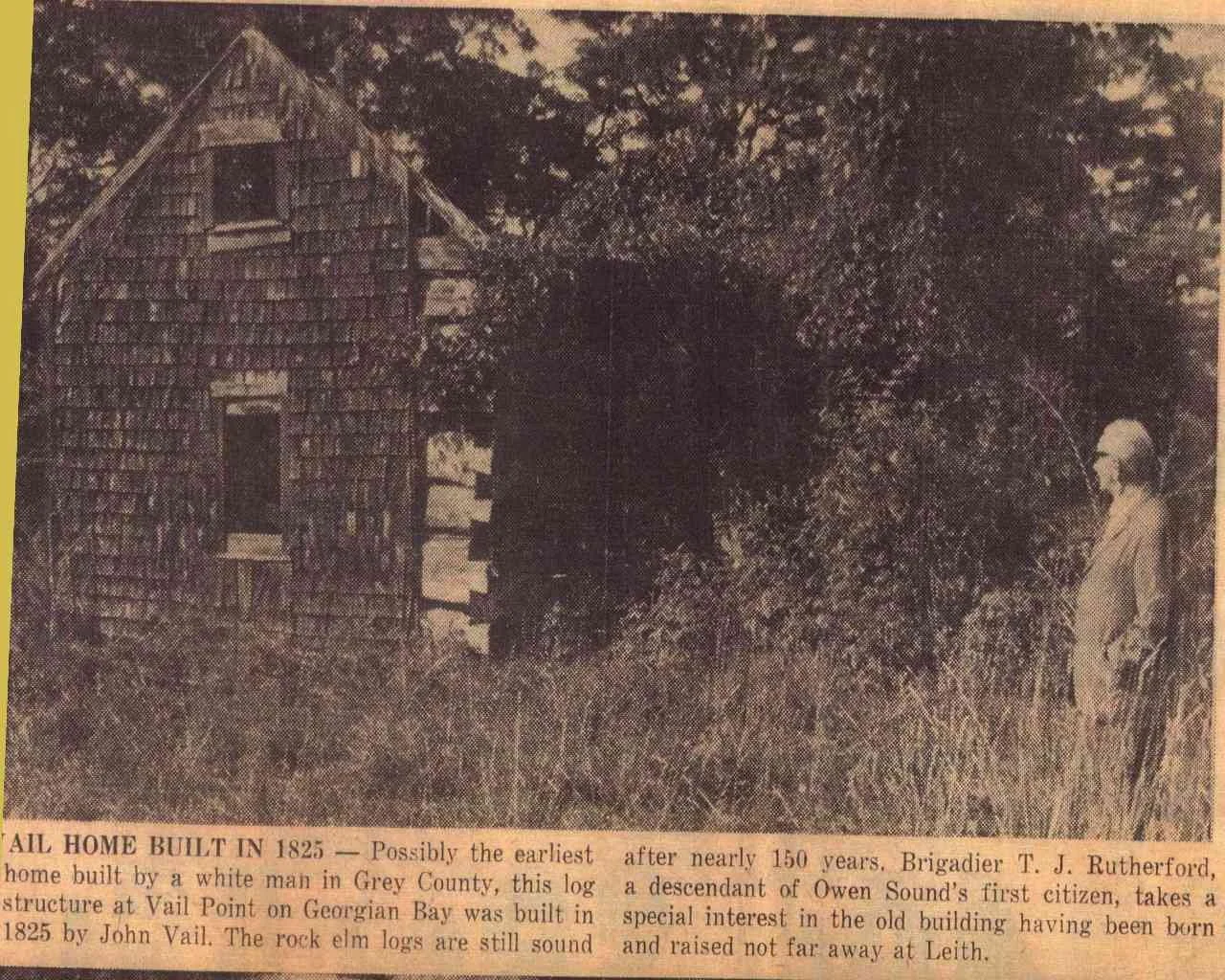
The story goes that “…in the spring of 1823, John Vail, a veteran of the War of 1812-14, built himself a birch-bark canoe at York, now Toronto, and paddled alone from Lake Ontario along the Indian waterway through Lake Simcoe to Georgian Bay, West of Penetanguishene, where there was a small naval establishment.” ~Owen Sound Sun Times, 1971
For those of you not from the area, that is a long, long, long way to paddle a canoe. And he did it at least twice.
My earliest Vail ancestor, Thomas, emigrated to the US from England in 1640. He and his wife first settled in Salem, Massachusetts (getting in ahead of the Witch trials of 1692) with the rest of the Puritans. More than a hundred years later, Thomas’s descendent, Peter (John Alexander’s dad), emigrated to New Brunswick, Canada as a United Empire Loyalist fleeing (or wanting no part of) the Revolutionary War in America (1775 - 1783).
From British American to British Canadian
The rest of my Vail ancestors stayed in America but, for some reason, Peter left. He chose to remain true to his British roots. What was it about him that he would leave behind his parents, and nine siblings and their families to live in a different country with no community of his own? What kind of a rift did this cause in the family? Did he ever go back to visit? What did his wife think of it all? Maybe she was the driver behind the move?
Way back in the day, British Canadians and Americans freely flowed across borders - for trade, for love, for hiding from the law. I have a few male relatives, married with children, who tried their hand with unassuming American women until they got caught for bigamy. Divorce wasn’t strictly necessary because being anonymous with no traceable past was easier to manage in the days of the telegraph machine and the pony express.
Which just goes go to show the intimate relationship Canada has always had with America. Despite America being bigger, stronger and, dare I say it, more prone to throwing its weight around, we’ve managed to hold our own when they came a-calling. I imagine we will do so again.
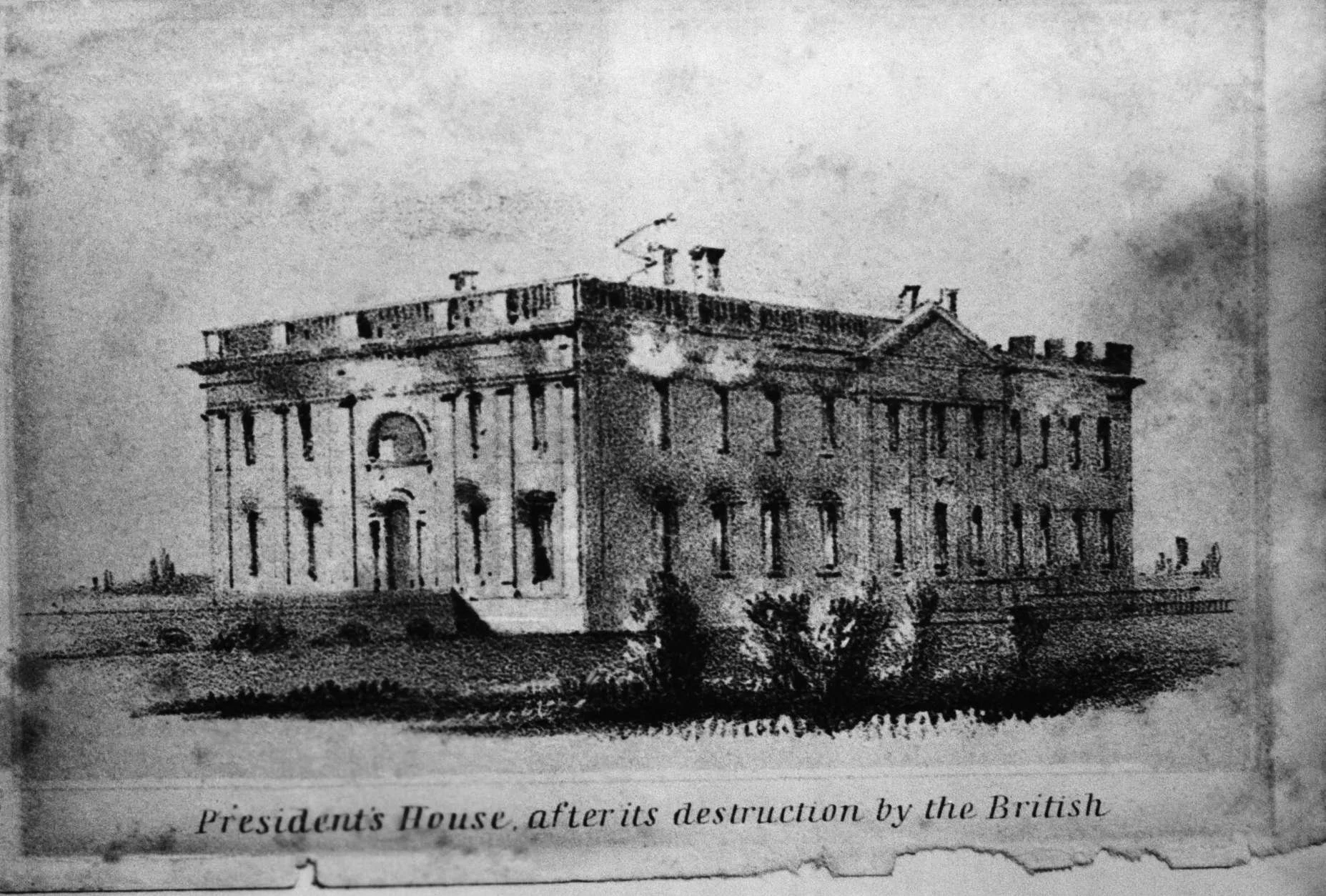
Technically, it was the British who burned down the White House in 1814. Canada didn’t yet exist. But we do lay claim to the victory and rightly so.